Before the Flower Border: The Garden's Structural Bones
Garden structure gives a border shape before flowers arrive. Learn how to plan paths, walls, and clipped forms that hold the design through changing seasons.
Garden structure is what lets a garden make sense before the flowers open: the path leads somewhere, a wall gives the eye a boundary, and a clipped form holds its place through change. Start by looking at the ground and the edges, not by choosing plants. The framework should work in bare soil, summer growth, and the untidy pause between them.
What should the structure do?
Decide what the garden needs to make legible. A path can connect the door to a useful destination, divide one area from another, or invite a slower route past a view. A wall can contain a slope, shelter a seat, or mark the edge of a room. Clipped forms can signal a threshold or give a loose planting a firm counterweight.
Choose one primary job for each element. A path asked to be both a direct route and a meandering promenade tends to satisfy neither. A low wall that is meant to retain soil has a different practical role from a freestanding boundary, even if the two look similar. Keep the function in view before settling on shape.
Walk the garden at the times you normally use it. Notice where feet already travel, where a view stops, and which corners feel exposed or neglected. Those observations are more useful than drawing a symmetrical plan merely because a blank page seems to invite one.
Where should a path lead?
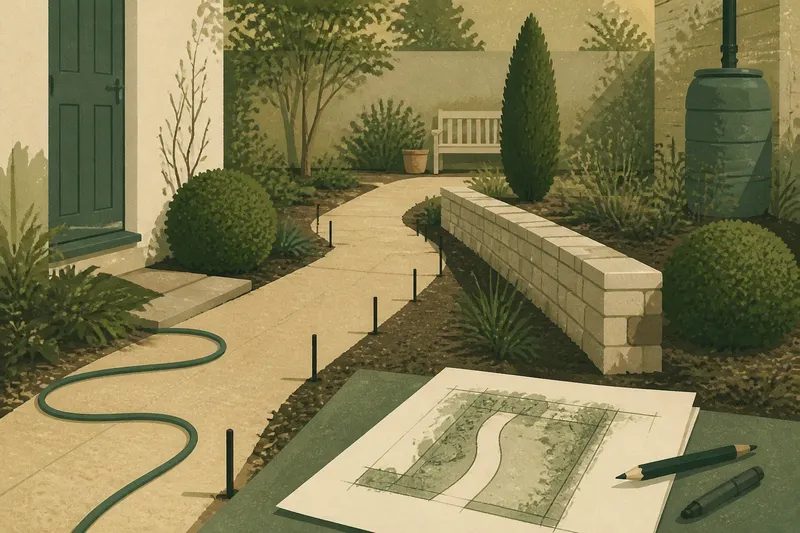
Mark a possible route with a garden hose or a line of stakes. Follow it on foot, including the turns. Does it reach a real destination, such as a gate, bench, compost area, or patch of sun? Does it leave enough room beside it for planting and maintenance? A route that looks graceful from above can feel awkward when walked.
Give the path a clear beginning and end, even if it curves. Let a turn reveal something: a doorway, a tree, a seat, or a change in enclosure. The route need not point directly at every feature. It should, however, feel intentional rather than like a line left over after the beds were drawn.
Use a simple sketch to compare options. Mark doors, gates, existing trees, drainage trouble, and the places where people already cross the garden. Then draw the path over that information. A line on paper is easy to move; a finished edge is less so.
How can a wall shape a garden room?
Read the edges before adding new ones. A house wall, fence, hedge, or change in level may already define a room. Add a wall only where it creates a useful boundary, supports a needed change in level, or gives a place a sense of shelter. Too many hard edges can make a small garden feel like a corridor of enclosures.
Think about height and view together. A low edge can define a bed without blocking sightlines; a taller boundary can screen an unhelpful view but may also shade nearby planting. Sit or stand where the wall will be seen from, and consider what it hides as well as what it frames.
Material contributes to the garden’s character. Brick can relate a new edge to a house; stone may sit comfortably with a rugged setting; timber can read as lighter and more informal. Let existing materials guide the choice, but do not match them mechanically. A restrained contrast can make the boundary clear without turning it into a display object.
Where do clipped forms belong?
Use clipped forms as punctuation, not as a substitute for the whole design. A pair of compact shrubs can mark an entrance; one upright form can hold a corner where the surrounding planting spreads. Repeated balls or columns may suit a formal layout, but repeating them without a reason can make the garden look like it is waiting for inspection.
Choose plants with a growth habit and maintenance demand you can live with. Box is familiar in formal edging, while yew can form larger, darker shapes; other suitable shrubs depend on climate and site. Consider mature size, access for trimming, and whether the plant will tolerate the light and soil available. Check the plant label, manufacturer instructions, or local rules where they apply.
Say you have a narrow side garden with a door at one end and a water butt at the other. You mark a direct route with a hose, then shift it to pass a small seating spot without blocking access. A single clipped shrub beside the turn could make that pause visible from the door, while a low wall on the exposed side could give the seat a boundary. The expected result is a route that reads clearly and a sitting place that feels distinct, without asking a seasonal flower display to do the organizing.
How should the framework meet the seasons?
Judge the structure when the border is least full, not only when it is at its lushest. In spring, paths and edges may be especially visible; in summer, planting can soften them; later, stems and leaves may leave the framework exposed again. The structure need not dominate every season, but it should remain intelligible when foliage retreats.
Look at shadows and sightlines as the sun moves. A wall can cast a useful strip of shade or leave a damp corner; a clipped evergreen can hold a dark shape against pale stems. Keep the seasonal role modest. The aim is not to make every month perform equally, but to give each month a garden whose arrangement still makes sense.
What questions help before you commit?
Should a garden path be straight or curved?
Use the route that best connects real destinations and fits the space. A straight line can clarify a narrow garden, while a curve can slow movement or reveal a view, provided it does not create a pointless detour.
Can a wall make a small garden feel smaller?
It can, especially if it blocks a view or encloses every side. A carefully placed low edge may instead define a bed or seating area while leaving the garden visually open.
Are clipped plants suitable for an informal garden?
Yes, if their shape has a clear role and does not overwhelm the surrounding planting. One crisp form can make loose growth look intentional; a rigid row may change the garden’s character more than you want.
How much maintenance should clipped forms receive?
Choose a form you can keep within the time and access available. If regular trimming is unlikely, favor a naturally compact plant or a looser outline rather than a shape that depends on frequent correction.
What should you settle before planting?
Mark the proposed path, wall line, and clipped forms on the ground before buying plants. Walk the route, look from the house, and check whether the edges leave workable planting space. Adjust the plan while it is still easy to change.
Then choose plants to soften, frame, or contrast with that framework. Garden structure is not a stage set waiting for flowers; it is the arrangement that gives them somewhere to belong. If the garden still reads clearly when the border is quiet, its lasting bones are doing their work.